Twilight Zone

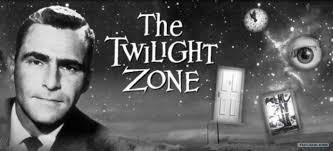
My favorite TV show of all-time is Rod Serling’s classic “Twilight Zone” which aired from 1959 to 1964. The show and its creator, host and writer for most of the episodes, Mr. Serling himself won several Emmy awards for his work on the show. Many of the stories have stood the test of time and will last forever.

Sure, some of the stories were whacky and out there but most of them were well-written stories with memorable plot twists, especially at the end (the Twilight Zone trademark). There were always wonderful metaphors and allegories sprinkled throughout the stories.

Update: CBS has started streaming a great deal of classic Twilight Zone episodes! Just to to the Twilight Zone page and enjoy!

Here are some of my favorite stories off the top of my head (Click the title to watch the full episode):

  • Walking Distance: A stressed out buiness man somehow manages to go back in time to his old neighborhood and childhood. The scene where he meets his dad is unforgettable.
  • Kick the Can: One of the best ever! An old man tries to make everyone remember how it feels to be young again!
  • Time Enough At Last: A bookworm survives the nuclear war and can finally find the time to read all the books he wants until another tragedy occurs.
  • A Stop at Willoughby: Businessman dreams about living in a paradise called Willoughby that he dreams about during his long commute to work.
  • The Changing of the Guard: A professor regrets that he wasted his entire life teaching boys nothing worthwhile only to be visited by many of his students (ghosts!) and realizes his life meant more than he thought. It smacks of Goodbye Mr. Chips and It’s a Wonderful Life and even “Dead Poet’s Society”! What a trio!
  • The Trade-ins: An old man who’s very ill and his wife decide to get younger bodies but can only afford one body so the old man gets it since he’s sick. The problem is that now his wife is still an old woman.
  • Eye of the Beholder: A woman has extreme cosmetic surgery because she’s hideous and wants to fit into society.
  • Number Twelve Looks Just Like You: In the future, people can choose how they will look. One woman rebels against this conformity and wants to remain her own flawed self.
  • Night of the Meek: Art Carney plays a drunk that wishes he could be Santa for one Christmas.
  • Nothing in the Dark: An old woman is afraid to die and becomes a shut-in. Death comes knocking in a surprising manner.
  • To Serve Man: Aliens come to Earth and everyone loves them except one scientist who has suspicions.

Those are just a few of my favorite episodes that same to mind without any research. I’m sure there are many more that I can’t recall right now. They are all wonderful little movies to me with big life lessons. I love Rod Serling and consider him a genius. Sadly, he died very young at the age of 50 in 1972 from a heart attack. He was famous for being a chain smoker and known to enjoy a drink of two. It wasn’t a surprise that he suffered heart problems at such a young age (50) and died during heart surgery.

Still, he’s left us an incredible body of work. Not just the work on the zone but also all of the award winning plays he wrote for live television in what they call the Golden Age of television. Also, he worked on the script for “Planet of the Apes” including one of the most memorable cinematic endings ever when Charleston Heston sees the Statue of Liberty. Pure Rod Serling and a Twilight Zone moment indeed.

Here are some episodes in clips and in their entirety. “Walking Distance” and “A Stop at Willoughby” are extra special because they were written by Rod Serling and believed to be very personal to him. They were about men getting older and feeling the stress and pressure of their careers and dream of a simpler more peaceful time and existence. Rod was feeling the same pressure thanks to the intense grind of his career. Another one that he wrote was for the NightGallery series was called “They’re Tearing Down Tim Riley’s Bar” (1971). Some Serling experts consider this one to be the third in a trilogy along with Walking Distance and A Stop at Willoughby. It was also about a burned out executive after 25 years at a company at age 48 and feeling washed up. Here’s the episode:

“The Changing of the Guard” is also considered important because it was another one written by Serling and supposedly echoed his own doubts about whether or not his life’s work (his writing) really meant anything to anyone just like the professor in the story wonders if his work meant anything. I truly wish Serling knew how timeless and important his work was. I hope he knew deep down. I feel solace from the fact that he did enjoy massive success in his lifetime with many awards and praise for his writing.

Share